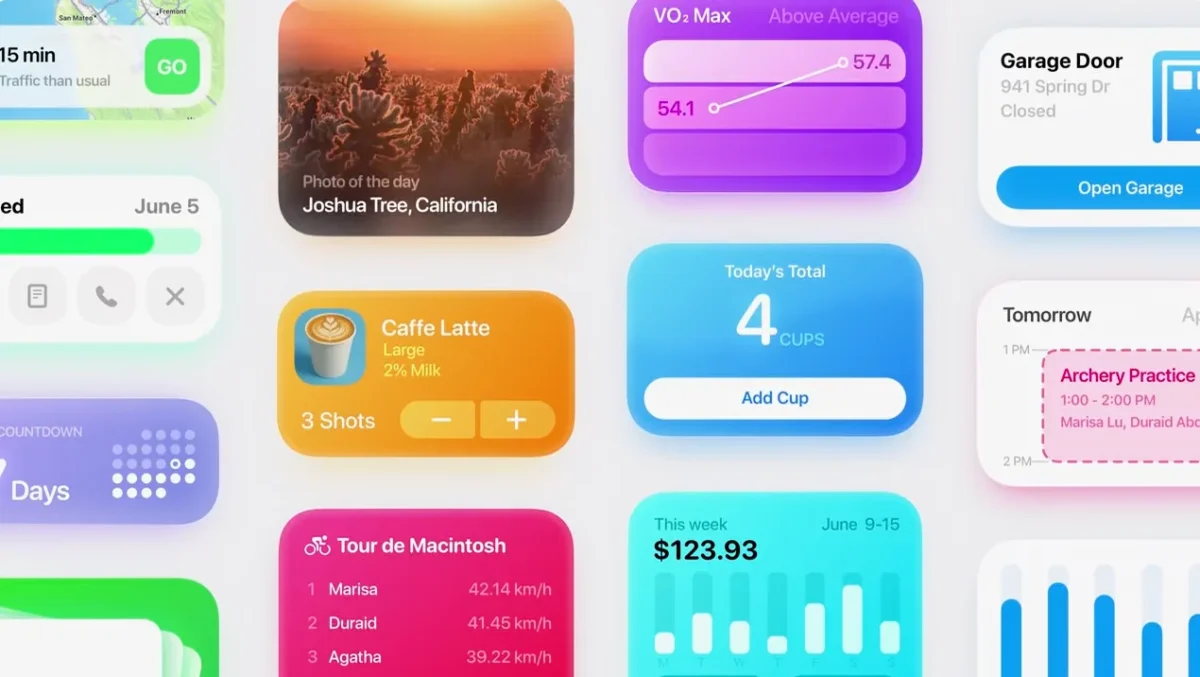
David Imel opened by explaining why the current beta mostly demonstrates Apple’s own apps, then Marques Brownlee, Andrew Manganelli, Adam Molina, and Ellis Rovin join a wider conversation about developer adoption, Google and Telegram, personal context, open protocols, and whether Siri can make app experiences useful without opening the apps themselves.
David Imel — 01:01:43 Welcome back. Okay, this is sort of a rant and also sort of a I understand something now
Andrew Manganelli — 01:01:52 that I think a lot of people might not understand. Does
Andrew Manganelli — 01:01:54 that mean you’re seeing both sides of this?
David Imel — 01:01:56 I’m in the middle.
Andrew Manganelli — 01:01:58 Okay, so we’re all using iOS 27 beta 3, correct? Not not all of us.
Ellis Rovin — 01:02:05 I’m using Android.
Andrew Manganelli — 01:02:06 Android.
David Imel — 01:02:07 All right. Ellis is not Okay. Are you on beta 3?
David Imel — 01:02:10 Yes. Marquez and I are all using iOS 27 beta 3. Okay. So, something that’s been kind of weird in iOS 27 in general, the beta,
David Imel — 01:02:22 is that, you know, we’ve talked a lot about how all of the Apple apps have all this special access to Siri. Siri’s the big update in iOS 27, and we’ve been wondering, you know, is Siri only going to be good with Apple apps? when I ask questions about personal context and it only sorts through my messages app, but it can’t go through Telegram, can’t go through Signal, stuff like that. If I ask it to send an email in Gmail and it just can’t do it. It can like open Gmail, but it can’t do anything else. You know,
David Imel — 01:02:51 the big question has been, is Apple going to try to keep people in their walled garden where if you use Apple apps, everything’s wonderful and dandy and nice and clean and beautiful? And I discovered an answer late last night.
David Imel — 01:03:04 Okay. Um, so as it turns out, Apple is allowing developers to, you know, allow their apps to give personal context, all of this stuff to Siri.
Marques Brownlee — 01:03:18 Yes.
David Imel — 01:03:18 But the current version of Xcode that’s in beta does not allow you to ship apps with these functions yet.
Andrew Manganelli — 01:03:25 Mhm.
David Imel — 01:03:26 So, right now, you can do them in test flight. So, if you have a test flight version of an app, you can see what Siri might be able to do with it once everything comes out. Everyone’s sort of, you know, not officially reviewing Siri, but everyone’s just posting about like, here’s what Siri can do, here’s what Siri can’t do. Everyone’s frustrated. And it turns out we’re not actually going to see the full capabilities of the new Siri until it officially launches on like the iPhone 18.
Marques Brownlee — 01:03:53 Yes. In September.
David Imel — 01:03:55 In September.
Marques Brownlee — 01:03:56 Yeah. I think this is something that I found to be generally true for a lot of like a lot of the big iOS updates. You’ll see a lot of your apps get that update in September. Yeah.
Marques Brownlee — 01:04:08 So, they’re not pushing like when we got liquid glass, we had like months and months during the summer of like, oh, okay, what developers are going to embrace liquid glass? And not a whole lot of them did. And then September happened and the new iPhone came out and then everyone got the update and then a bunch of our most popular apps started to get liquid glass. Yeah,
Marques Brownlee — 01:04:24 I think that’s generally true about most of the big stuff in iOS, whether it’s adopting new features or new plugs that developers can jump into. That stuff will wait until the September drop.
David Imel — 01:04:35 Yeah, I think that the confusion around this is that we talked a lot about app intents, right, which is this ability for apps to have this list of functionality that can be used in shortcuts. And that’s been around for a long time. That’s been around for like 5 years. But the new version of iOS is introducing two new things. It’s introducing entity schemas and intent schemas. And uh entity schemas are like index cards. It tells the app this is a recipe. It tells Siri this is a recipe. This is a photo. This is a note. Siri can read those cards and it can answer however it needs to use that
Andrew Manganelli — 01:05:10 and has like a set number of category things.
David Imel — 01:05:13 Yes. Uh as far as I understand there are a ton.
David Imel — 01:05:16 Yeah,
David Imel — 01:05:16 there are like a lot. There used to be not that many when it was on an older version of Shortcuts, but now there’s like a ton.
Marques Brownlee — 01:05:21 I heard I was listening to a podcast with uh the flighty developers. Apparently flights is not one of them yet.
Marques Brownlee — 01:05:26 Yeah.
Marques Brownlee — 01:05:27 And they were like,
Marques Brownlee — 01:05:28 “Please add that.”
Marques Brownlee — 01:05:29 Yeah, that seems like one of them that should be there.
Andrew Manganelli — 01:05:32 Yeah.
David Imel — 01:05:32 Uh and then there’s intent schemas, which is the app that can tell the app can tell Siri like what buttons it’s allowed to press, sort of, you know. Mhm.
David Imel — 01:05:40 So, I think this is this is just a very different way than than Google looks at the AI version of Gemini using your phone because Google’s like, “We’re just going to have Gemini agentically press buttons on your phone.” Yeah. Figure it out.
David Imel — 01:05:52 And this is a very classic Apple mentality of like we will give you the the limited tools that we expect people are going to want to use. And to Apple’s credit, apparently that list is very very long. Although it apparently does not include flights.
David Imel — 01:06:08 Flights. Yeah. which is annoying for flighty. Very annoying for flighty. But the developers I talked to in over the last couple days were very very positive and excited about like when this officially launches and they were very intent on being like
David Imel — 01:06:24 hey
David Imel — 01:06:25 we’re not really seeing the full version of the new Siri right now. It’s only in Apple’s apps because Apple’s apps have all these capabilities and they’re sort of seen as like the this is what your app should be able to do.
Andrew Manganelli — 01:06:35 Mhm.
David Imel — 01:06:36 Um but until Yeah. until it officially launches, I don’t think we’re going to be able to see everything. So, the the big question is still, will Google adopt schemas and app intents,
Marques Brownlee — 01:06:47 please?
Marques Brownlee — 01:06:47 Uh the newer version of App Intents.
Marques Brownlee — 01:06:49 Yeah,
David Imel — 01:06:50 it would be really nice. Uh we really need to push them to do that because again, without Google adopting that, it makes Siri half useless.
Marques Brownlee — 01:06:58 Yeah. So just for an example for that to be clear like right now if I ask about like where am I going to be in a week
Marques Brownlee — 01:07:04 it will go okay you’re asking for specifically for a calendar event so now let me search for a calendar event let me look at what all of the developers on this phone have labeled as calendar events right now that’s just Apple calendar because that’s Apple’s app and none the other apps have been updated yet
Marques Brownlee — 01:07:20 in the future we are hoping that other calendar apps specifically Google calendar
Marques Brownlee — 01:07:25 will also label all of their events as calendar events using this built-in tool so that Siri will be able to see those and we’ll be able to pull from that app and answer it.
Marques Brownlee — 01:07:35 Right?
Marques Brownlee — 01:07:36 So, as of right now, we just have Apple’s apps which like as I test Siri, I’m just getting like stuff from Google Photos, stuff from Google, sorry, stuff from Apple Photos,
Marques Brownlee — 01:07:45 stuff from iMessage, stuff from my calendar, and it’s it’s pretty simple. It also like fails at answering a lot of things cuz I say, “Oh, do you know this about me?” And it goes, “No.” Yeah,
Marques Brownlee — 01:07:56 but if I ask where was I, it will pull from the geol location of the photos that I took on those dates. So that’s pretty cool.
Marques Brownlee — 01:08:04 But yeah, from Apple photos. But it would be nice if there was some more third party support.
David Imel — 01:08:09 Yeah. And the reason this is very confusing is because again app intents have existed for a long time, but the old version of app intense was much more limited to the things that it could do because those are integrated to shortcuts. So everything that shortcuts can do, Siri AI should be able to do. Um, but now because we’re introducing these new schemas, it’s going to be a lot more um, yeah,
David Imel — 01:08:29 flexible. There’s going to be a lot more things that it’ll be able to do.
David Imel — 01:08:32 So, I’ve been seeing people tweeting like a lot throughout the week like, “Oh, has anyone actually seen any apps that support the new Siri yet?” It’s kind of weird that it’s not out. The reason it’s not out is because Apple literally does not allow it to be out yet.
David Imel — 01:08:45 Um, so hopefully we’ll see it in the full version
Marques Brownlee — 01:08:48 in fall.
Marques Brownlee — 01:08:48 I want to clear that up. Yeah.
Marques Brownlee — 01:08:50 Yeah. So,
Marques Brownlee — 01:08:51 wait. So, the rant is
Marques Brownlee — 01:08:54 it’s not out yet.
David Imel — 01:08:55 The rant is that it’s not a really Well, this is why I said it’s not really a rant. I’m just sort of clarifying because a lot of people are like a lot of people were thinking,
David Imel — 01:09:05 is this another
David Imel — 01:09:06 Apple walled garden approach of only letting the new Siri be magical with Siri
David Imel — 01:09:12 or with Apple apps? And if you like cuz I use Telegram a lot, right?
David Imel — 01:09:16 Yep. It can’t pull any of my personal contacts from Telegram right now, right?
David Imel — 01:09:19 But if Telegram supports app schemas when iOS 27 officially launches, then I’ll be able to pull messages from Telegram, personal contacts from Telegram. Yeah,
David Imel — 01:09:29 Google Gmail. If Google supports it, we really need you to support this Google. If you do not support this series, like semi useless,
Ellis Rovin — 01:09:37 just like how they put YouTube on the Apple Vision Pro.
David Imel — 01:09:39 That’s that’s the thing.
Andrew Manganelli — 01:09:41 Sounds really funny to me like no one cared.
David Imel — 01:09:43 Hey Google, please save Siri. Yeah, that’s that’s
Andrew Manganelli — 01:09:46 just the way you’re saying it.
Marques Brownlee — 01:09:49 Is it in Google’s best interest? I guess
Marques Brownlee — 01:09:52 okay, this is actually a real question.
Marques Brownlee — 01:09:53 Yeah.
Marques Brownlee — 01:09:54 Is Google so ubiquitous and powerful enough that it’s actually better for them to not support this because it makes Siri worse and it makes you more likely to want to use a phone that it does work on or is it not powerful enough and you’re going, “Wow, Siri doesn’t work with Gmail. let me switch to Yahoo mail. Like I think you’re probably going to keep using Google services no matter what. Right. So if it doesn’t if they choose not to support all these Siri intents, what does that mean for the users?
David Imel — 01:10:23 Yeah. Okay. So I talked to uh Matthew Cassinelli about this. He was on the shortcut shortcuts team when it got acquired by Apple. So he’s like very well versed in this stuff. And I asked him about this cuz I was like, “Hey, Gmail shows suggest like they show ads inside of Gmail when you open Gmail. So wouldn’t Apple not be incentivized or wouldn’t Google not be incentivized to allow Apple to just give you the information instead of opening the app?
David Imel — 01:10:47 And he said that’s kind of true, but at the same time, Google is already planning for a future where ads that are shown in front of you are not their main revenue driver.
David Imel — 01:10:57 True.
David Imel — 01:10:57 Uh so he thinks that the experience benefit of the app having a good experience is going to be more important than actually opening the app in the future. Now, that’s probably a lot more true for smaller individual developers than it is for like Google who just wants to monopolize your eyeballs all the time,
Andrew Manganelli — 01:11:16 but it there’s still I don’t know. You got to weigh the pros and cons there.
Marques Brownlee — 01:11:20 Yeah, I do. I I feel like if it’s if you’re a smaller, more competitive developer, you have others who are in the same class as you, you’re like, “Oh, I definitely want to support this because all my competitors will, and if I don’t support it, people might not want to use my app.”
Marques Brownlee — 01:11:33 Yeah.
Marques Brownlee — 01:11:34 But if you’re Google, that is an interesting place to come from. I hope they support it.
Ellis Rovin — 01:11:38 I feel like there is a little bit of pressure on Google though to support it because if you have a bad experience in the Gmail app on iPhone, you’ll probably just download a different mail app or whatever.
Andrew Manganelli — 01:11:48 Or you’re not sitting there being like, “Oh, my iPhone’s broken. Why do I sound like an Australian Australian?”
David Imel — 01:11:55 Um, but yeah, they’re going to be like, “Google’s being a pain in the neck right now.” And also just like Google wants people on their services. If your services sucked on the hardware that 85% of Americans use
Andrew Manganelli — 01:12:08 well they shooting yourself in the foot.
Ellis Rovin — 01:12:10 Chances are they’ll switch email apps before they switch phones.
Marques Brownlee — 01:12:13 Yeah.
Marques Brownlee — 01:12:13 Well, they switch email services.
Ellis Rovin — 01:12:15 The reason they can switch email apps is because email is a open protocol.
Ellis Rovin — 01:12:19 Get the French horn. Get the French horn.
Andrew Manganelli — 01:12:23 So I will say honestly, yeah, if Google doesn’t support this stuff, I would probably switch email apps. I’m not like that tied to Gmail, the Gmail app. I just use it because I’ve always used it.
David Imel — 01:12:33 Yeah.
David Imel — 01:12:34 But if Siri could pull personal contacts from a different
David Imel — 01:12:36 from like Outlook or something.
Marques Brownlee — 01:12:38 Okay. The thing is you’re saying you’re switching your app, but like I switched to notion calendar, but notion calendar has to pull from Google calendar the service,
Marques Brownlee — 01:12:46 right?
Marques Brownlee — 01:12:47 So is notion calendar able to show those flags?
David Imel — 01:12:50 I guess Apple calendar. Apple. Okay. Cal wait. If I do calendar for example,
Andrew Manganelli — 01:12:56 I mean it would be whatever calendar app supported the schemas.
Ellis Rovin — 01:13:00 I think calendar or mail because you’re just logging into your Google account on both of them. So it’s being reflected on Apple like it’s not the main thing.
David Imel — 01:13:07 Well, if you sync your Google calendar to your Apple calendar. Yes. It still has to pull the data from the Apple calendar app which doesn’t always transfer correctly.
Andrew Manganelli — 01:13:16 Yeah. Uh that’s that’s a whole another dimension that I’m not as an expert about. I I don’t think it would like Okay, iMessage, if I search for it in Siri, it has the entire history of all my iMes ever. Yeah. Because it can just pull from that.
Marques Brownlee — 01:13:28 Yeah.
Marques Brownlee — 01:13:28 But if I have Gmail, the app on my phone,
Marques Brownlee — 01:13:33 that’s not storing locally all of the emails I’ve ever had and all of the attachments I’ve ever had.
Marques Brownlee — 01:13:39 Yeah.
Marques Brownlee — 01:13:40 So, it has it has the ability to go look that stuff up. Now, if I use a different email app, that’s even less connected. that’s now able to pull from Gmail the service, but it’s not it’s storing probably even less locally than the Gmail app is.
Andrew Manganelli — 01:13:52 But it could probably Siri could probably do a thing where it searches within the email app and then pulls the context out and just surfaces it to you without actually like
Andrew Manganelli — 01:14:01 and theoretically that’s the same level of access if it if it knows to go search the cloud.
Ellis Rovin — 01:14:06 It should be because of beauty of protocols
Marques Brownlee — 01:14:09 because of
Marques Brownlee — 01:14:09 I hope so.
Marques Brownlee — 01:14:10 Yeah.
Marques Brownlee — 01:14:11 All right. I’m rooting for this protocol. To be fair, to be fair, email and calendar are like the worst examples of this cuz those are already open protocols and so you should be able to sync those your calendar and your email to Apple calendar and Apple mail anyway.
David Imel — 01:14:23 Yeah, photos is probably the better example.
David Imel — 01:14:25 Photos is a good example. Um,
Andrew Manganelli — 01:14:27 Google Photos,
Andrew Manganelli — 01:14:28 flights, I guess.
Marques Brownlee — 01:14:29 WhatsApp is another one. Remember, you used to not even be able to have WhatsApp on multiple devices at the same time. Yeah.
Marques Brownlee — 01:14:35 So, if you wanted to search your WhatsApp history from your iPad, you would be like, “Well, I don’t know anything about WhatsApp cuz that’s on your iPhone.”
Marques Brownlee — 01:14:42 So, that’s another one.
Adam Molina — 01:14:44 Browser histories for freaking recipes. That’s where that’s the only place in my life where I need this. Do you know how annoying it is to be like, “Dude, I found
Adam Molina — 01:14:52 the best chicheronus recipe ever.” And you can’t remember. You didn’t save the link and you just want to know how much lime juice to add.
Adam Molina — 01:14:59 And so, you got to you’d have to use right now. You have to use Siri if you want to go. You got to go back to Google, find it. You got to click on a web page. You got to scroll through some childhood story of going to the Dominican Republic
Adam Molina — 01:15:11 just to just to get to the How is it my fault?
David Imel — 01:15:15 Because when you find a good recipe and you cook it and you know it’s good, you immediately copy all of the important parts into a note somewhere. Yes. Or Google.
Adam Molina — 01:15:24 When you find a good recipe and you make it and it’s good, you go numb and then you forget cuz you’re full. That’s a perfectly understandable experience.
Andrew Manganelli — 01:15:31 You didn’t enjoy it enough then. No, I enjoyed it so much I
Adam Molina — 01:15:33 that I never want to forget it again. Yeah.
Adam Molina — 01:15:35 Oh my god, there’s so many recipes where I’m like,
Marques Brownlee — 01:15:37 you don’t know if it’s good enough to save until you eat it. So, you have to eat it first.
Marques Brownlee — 01:15:42 Exactly. Sick the next morning.
Marques Brownlee — 01:15:44 Who knows?
David Imel — 01:15:46 I don’t know. I save them.
Andrew Manganelli — 01:15:48 Or how many days are you going before you’re like,
David Imel — 01:15:51 “Oh, that was a good recipe four months ago, and now I have to find
Adam Molina — 01:15:54 all the time.” You by next day, you should at least be like,
David Imel — 01:15:58 “That was good. I should save that recipe.” And then it’s right there. No, no, no. This is why they’re inventing the robots, Andrew. This is exactly why.
Andrew Manganelli — 01:16:07 If there was anything I really wanted AI for, it’s terrible recipe websites.
Marques Brownlee — 01:16:11 Maybe we’ll pull from browser history.
Marques Brownlee — 01:16:14 We’ll see.
David Imel — 01:16:14 I mean, yeah, if you use Safari right now if you use if you use Safari specifically.
Adam Molina — 01:16:19 And which one of uses Safari?
Ellis Rovin — 01:16:22 It’s also your fault.
Adam Molina — 01:16:23 Oh my goodness.
Adam Molina — 01:16:24 Okay, wait. I do want to formally apologize to Ellis on the podcast because I have started using Safari again and it is a good browser.
Ellis Rovin — 01:16:32 That’s I never said it was
David Imel — 01:16:33 I don’t think Adam’s opinions have any weight when he switches things every 3 months.
Adam Molina — 01:16:38 That’s why I wanted to try it. I was like, you know, I haven’t tried Safari in a long time. I’m always talking about it. Let me actually just try it out next week. It’s not bad.
Andrew Manganelli — 01:16:46 Pixel browser is so much better than Safari.
David Imel — 01:16:48 Pixel browser.
Andrew Manganelli — 01:16:48 Pickle browser.
Andrew Manganelli — 01:16:49 The pickle browser. Pickle ber. I think you’re talking about the uh
Marques Brownlee — 01:16:53 come back to Arcaldi.
Marques Brownlee — 01:16:54 Arc Mobile is a solid browser.
David Imel — 01:16:56 Arc Mobile’s solid. I still use it.
Andrew Manganelli — 01:16:58 Come back. Arc browser is that building they just found in Manhattan.
Andrew Manganelli — 01:17:02 True. It’s a deep cut and potentially a deep collapse. All right. Jeez. Um
Speaker names are best-effort assignments based on the episode’s camera cuts, official credits, and self-identifying moments in the conversation; very short interjections may still be misattributed.