This content is marked as members-only – you’ll need a membership to access it.

This content is marked as members-only – you’ll need a membership to access it.
I’ve just added a new shortcut to the Shortcuts Library to my set of Apple News shortcuts – a new shortcut for the Emoji Game in Apple News+.
Here’s how Apple describes the game:
“The object of this logic and word puzzle is to complete several phrases with as few moves as possible. Each emoji may be interpreted directly, through association, or in combination with other emoji. When you attempt an answer or expand a clue, it counts as a move.”
You can also do any of the following:
- Try an answer: Consider the various definitions or associations for the emoji, then drag the most appropriate emoji (or group of emoji) to complete each word or phrase.For example, a “pear” emoji 🍐 could complete “DISAP_ _ _ _,” but interpreted as “fruit” it could complete “_ _ _ _ _ FUL.”Letters relating to emoji may appear nonconsecutively in an answer. For example, dragging an “earth” emoji 🌍 to “L_ _ _N _ _E ROPES” completes the phrase “learn the ropes.”Interpret grouped emoji as a whole. For example, a single 🐠 could mean “fish,” while 🐠🐠🐠 might mean “school.”
- Expand a clue: Tap [
Eye icon]. This counts as a move.- Reveal answers: Tap [
Three Dots icon], then tap Reveal. The answers you didn’t find are shown. The puzzle doesn’t count in your Scoreboard stats and streaks.
Get the Emoji Game shortcut, check out the folder of Apple News Plus shortcuts, and browse the full Shortcuts Library – or read about Emoji Game from Apple Support.
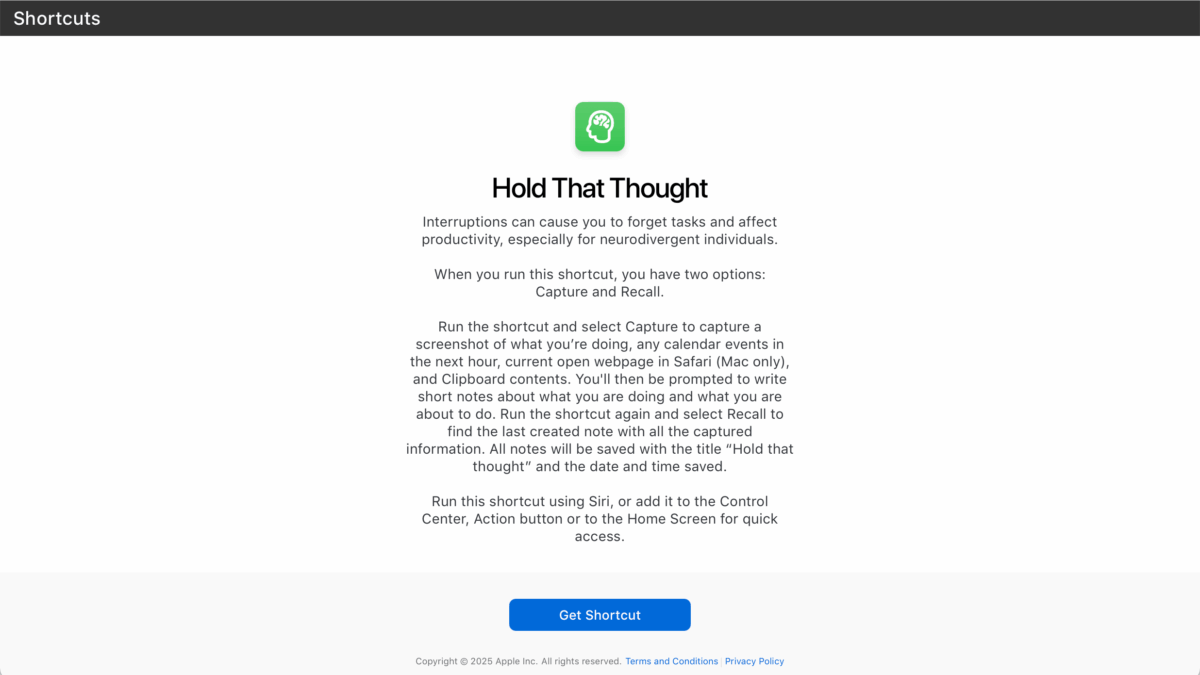
Today is Global Accessibility Awareness Day (GAAD), which Apple highlighted in their press release showcasing accessibility features coming in the next year – plus a new Accessibility shortcut called Hold That Thought:
New features include Accessibility Nutrition Labels on the App Store, Magnifier for Mac, Braille Access, and Accessibility Reader; plus innovative updates to Live Listen, visionOS, Personal Voice, and more.
Near the end of the release, Apple explains their new shortcut, plus the addition of the previous Accessibility Shortcut to Vision Pro:
The Shortcuts app adds Hold That Thought, a shortcut that prompts users to capture and recall information in a note so interruptions don’t derail their flow. The Accessibility Assistant shortcut has been added to Shortcuts on Apple Vision Pro to help recommend accessibility features based on user preferences.
Here’s how Apple describes the shortcut:
Interruptions can cause you to forget tasks and affect productivity, especially for neurodivergent individuals.
When you run this shortcut, you have two options: Capture and Recall.
Run the shortcut and select Capture to capture a screenshot of what you’re doing, any calendar events in the next hour, current open webpage in Safari (Mac only), and Clipboard contents. You’ll then be prompted to write short notes about what you are doing and what you are about to do. Run the shortcut again and select Recall to find the last created note with all the captured information. All notes will be saved with the title “Hold that thought” and the date and time saved.
Run this shortcut using Siri, or add it to the Control Center, Action button or to the Home Screen for quick access.
I love this idea, and the core concept matches the inspiration for my currently-secret app idea that I teased at the end of my Deep Dish Swift talk.
I do have a few suggestions for improvements to the shortcut, however:
To improve the shortcut as it is today, I’d simply remove the Show Alert and Wait actions, and assign this new shortcut to the Action button – that way you can immediately take a screenshot, then answer the prompts, and move on.
Going further, I’d love to see a new version of this next year once Apple Intelligence ships in full, which utilizes “Get On-Screen Content” and accesses all the data available from apps for Personal Context.
Get “Hold That Thought” for Shortcuts, view the announcement from the Apple Newsroom, and check out past updates from GAAD.

Last Tuesday, I gave a talk to over 300 developers at Deep Dish Swift about Apple Intelligence, where I made the following claim:
Apple will win the AI race
I’m an expert on App Intents, the API that powers the yet-to-be-seen features of Apple Intelligence – Actions and Personal Context. After designing implementations with my clients, and seeing the trends around AI-assisted coding, hearing rumors of an iOS 19 redesign, and seeing the acceleration effects of artificial intelligence, I believe Apple is skating to where the puck will be, rather than where it is now.
I’ll leave the thesis for the talk – but if you’re building for any Apple devices, you’ll want to understand how important App Intents is to the future of the platform:
Watch the 54-minute talk from Deep Dish Swift on YouTube Live.

I’m super excited to be giving my talk on Apple Intelligence live tomorrow at Deep Dish Swift – if you’re interested in tuning in to the conference stream, follow Deep Dish Swift on YouTube:
Check out Deep Dish Swift live and learn more about the conference.

I’ve just added a new folder to the Shortcuts Library — my set of Perplexity shortcuts for asking Perplexity to do research for you.
Use these to open the sections of the website, ask questions in new threads on iPhone and iPad, interact with the Mac app using keyboard shortcuts, go deeper on the Perplexity experience, and interact with the API:
Check out the folder of Perplexity shortcuts on the Shortcuts Library.
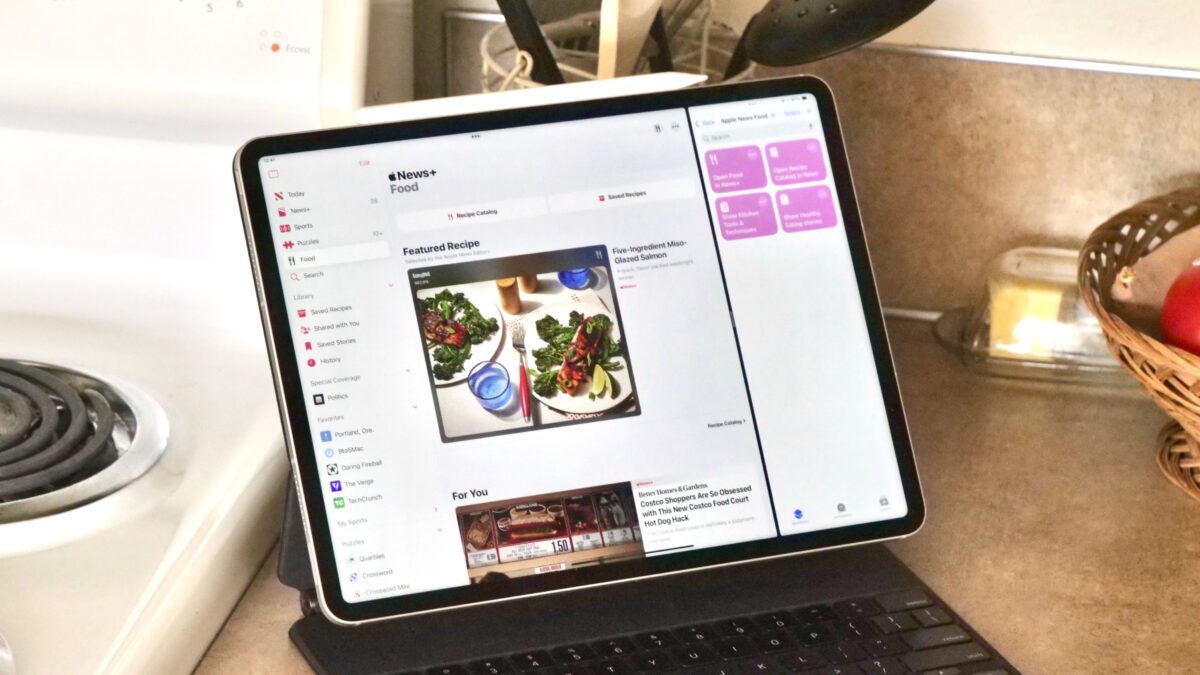
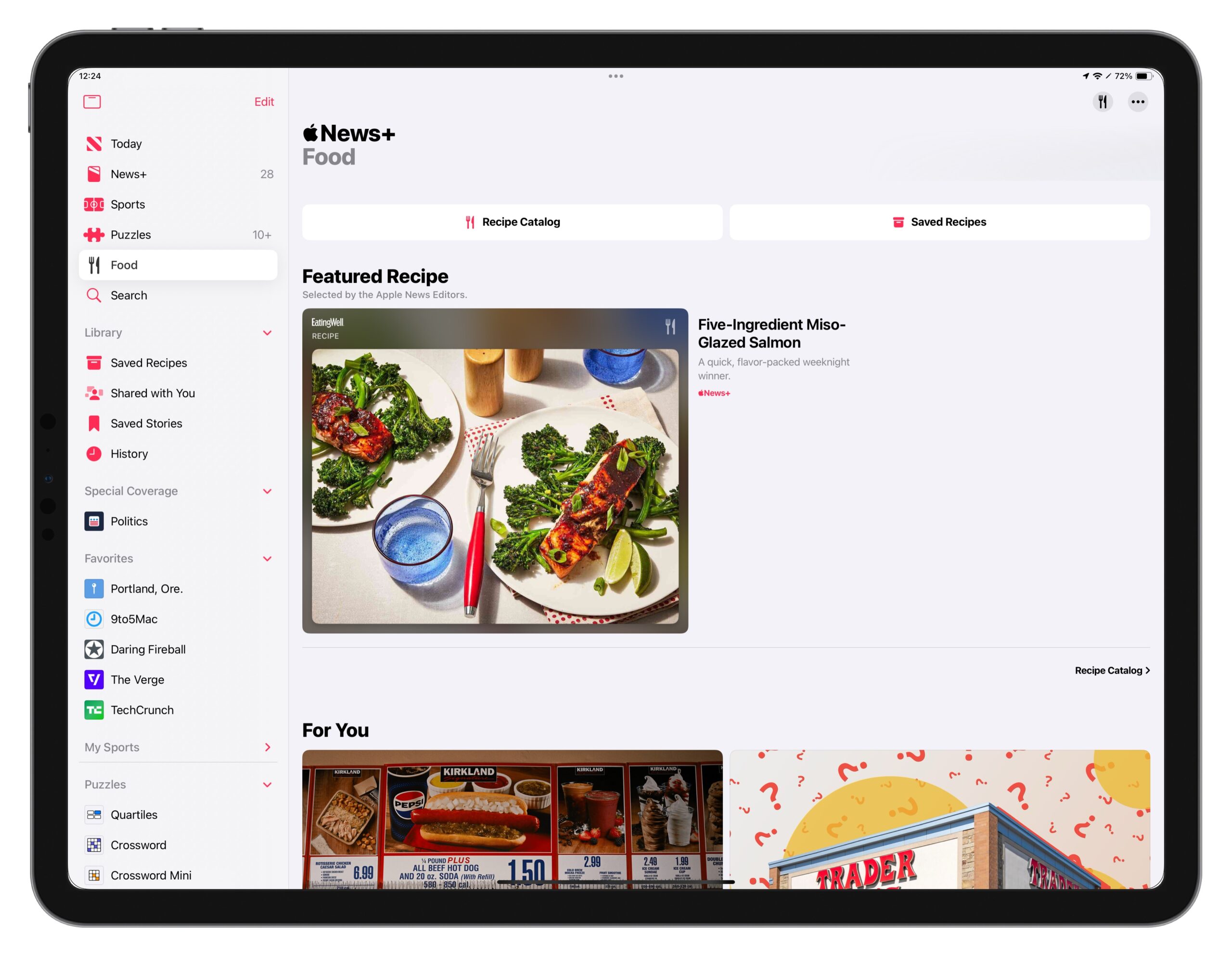
New in iOS 18.4, Apple is making a new Food section available to Apple News+ subscribers, creating a curated browsing and recipe experience within the app. Located on iPhone under the Following tab and Food section, or in the Food section of the sidebar on iPad and macOS, this new category curates stories for you based on your chosen interests and browsing history, plus provides an entire Recipe Catalog and cooking experience for recipes with ingredients & instructions.
The entire experience for News+ Food is fantastic, albeit somewhat buried inside the News app – that’s why I’ve built a set of shortcuts to quickly access the sections from anywhere. In my folder of Apple News Food shortcuts, you can find shortcuts to access the main Food section, the Recipe Catalog, and two curated sections that are shown within the category for Healthy Eating and Kitchen Tools & Techniques.
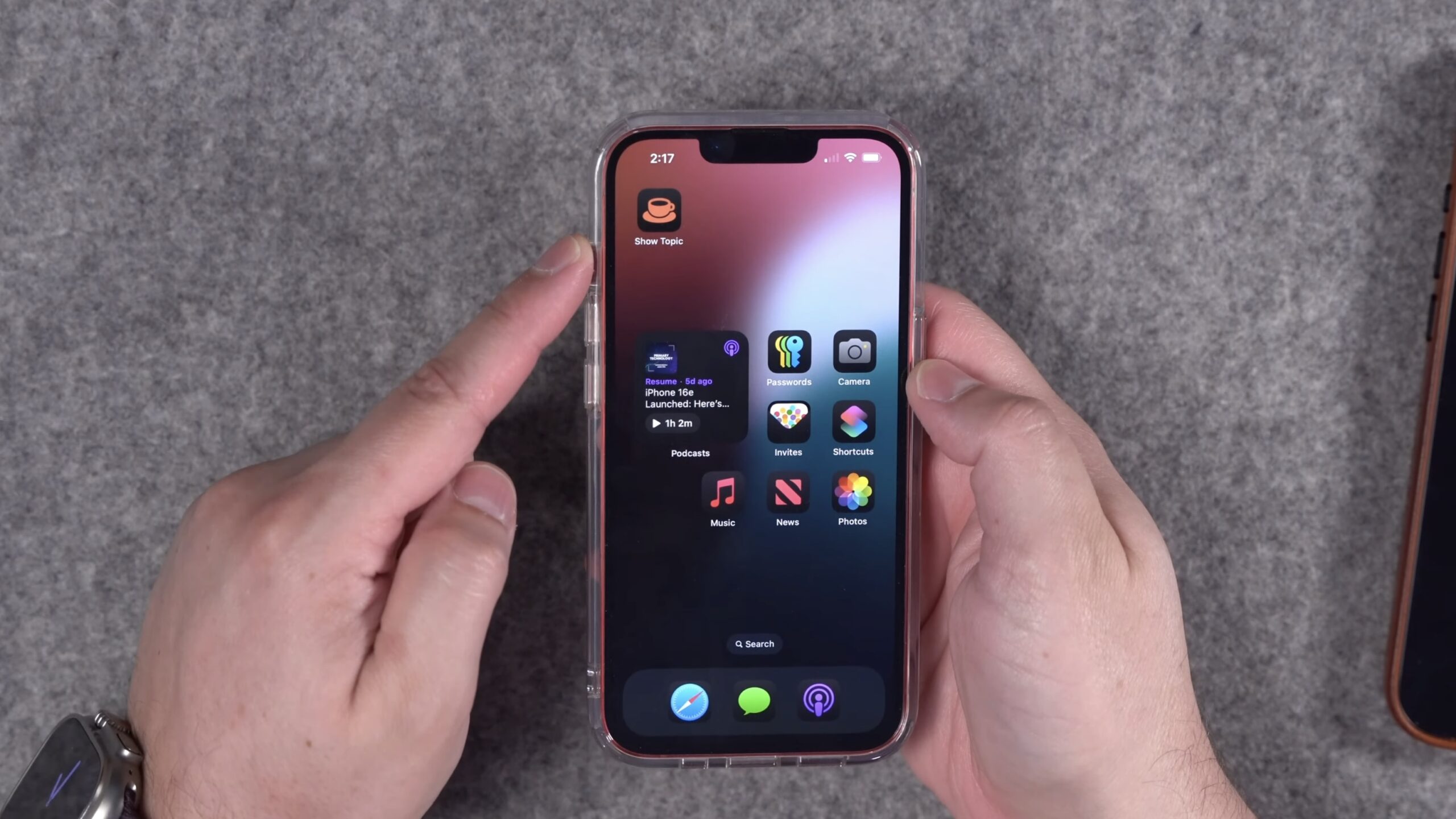
You can use these with Siri, place them in a Medium widget, or even add them as Controls in Control Center or the Lock Screen – the Recipe Catalog would work great using Add to Home Screen as well, as Stephen Robles demonstrated in his video that highlights the Food feature.
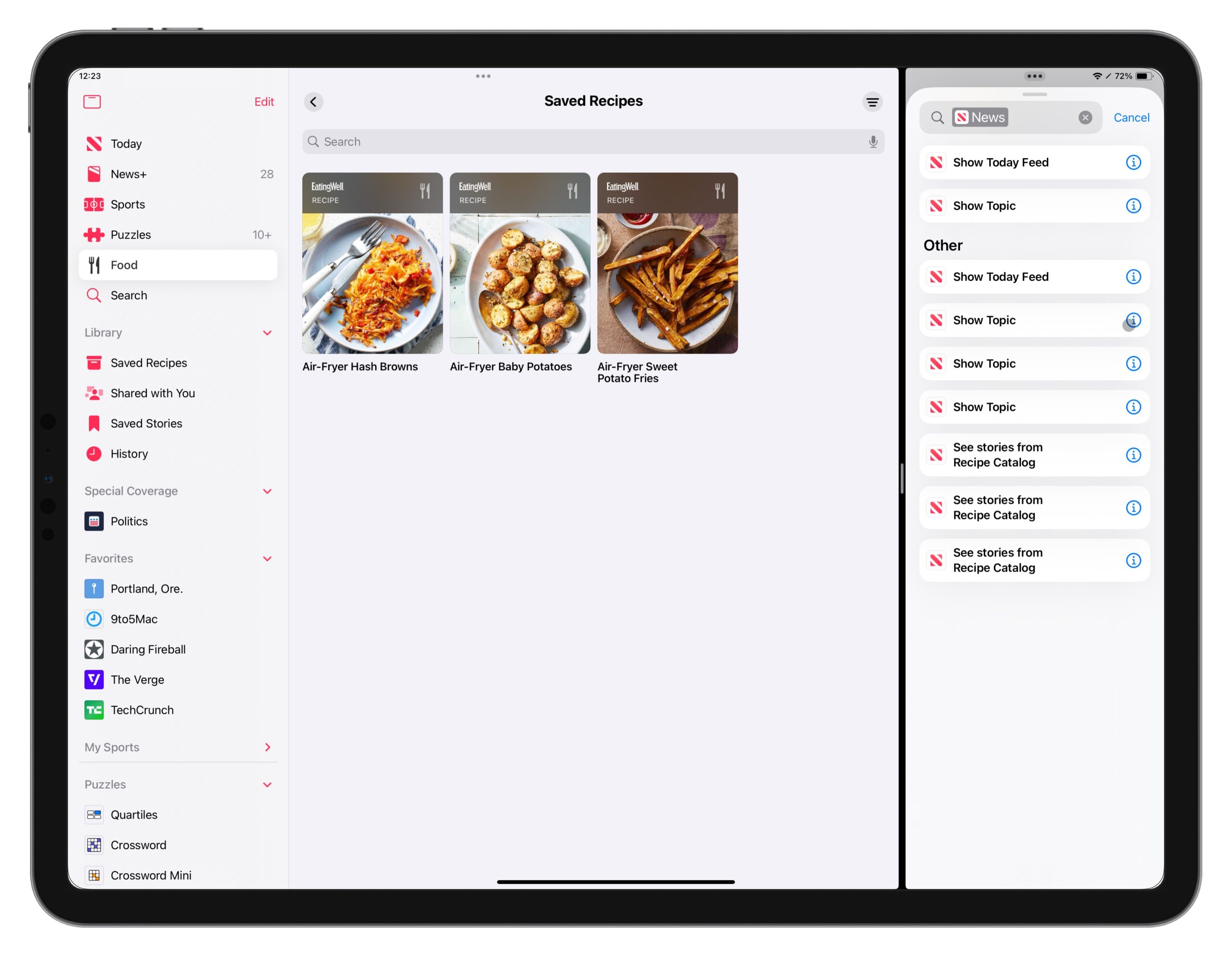
So far, the News team at Apple has only ever created the Show Today Feed and Show Topic actions, and relied on the concept of “donations” (where an action only becomes available after the user interacts with a particular section) for sections like Magazines, Puzzles, and now the Recipe Catalog. Along this route, I’d love to see the Saved Recipes section available as a donated action, as well as being able to open directly to a saved recipe would make a lot of sense. But, going further, I wish the News team would adopt a full suite of actions like Get Recipes, Find Recipe, Save/Unsave Recipe, Cook Recipe, and Read The Story (for a recipe).
Get the folder of Apple News Food shortcuts in my Shortcuts Library (requires iOS 18.4).

I’ve just added a new folder to the Shortcuts Library — my set of Apple News Food shortcuts for the new Food section in Apple News+, available in iOS 18.4.
Use these shortcuts to browse stories from the Food, Healthy Eating, and Kitchen Tools & Techniques sections, as well as open directly to the Recipe Catalog.:
Check out the folder of Apple News Food shortcuts on the Shortcuts Library.
I’ve just added a new folder to the Shortcuts Library — my set of Conversations shortcuts that take advantage of the Open Conversation action available in iOS 18.4.
Use these to open from any conversation, choose from your pinned chats, or open into any group chat or solo conversation:
Check out the folder of Conversations shortcuts on the Shortcuts Library.
Many people don’t know that the Shortcuts app can be automated on the Mac using its dedicated scripting dictionary.
This requires a bit of meta thinking, but that means both the application itself and all the shortcuts contained within it are available to control remotely via AppleScript and applications like Script Editor – as well as triggered via devices like the Stream Deck, which I use every day at my Mac mini.
In order to make these methodologies more accessible, I wanted to share instructions here on how to access the AppleScript dictionary for Shortcuts, plus share a copy of the commands so everything is freely available on the web.
Here’s how to access Shortcuts’ scripting dictionary:
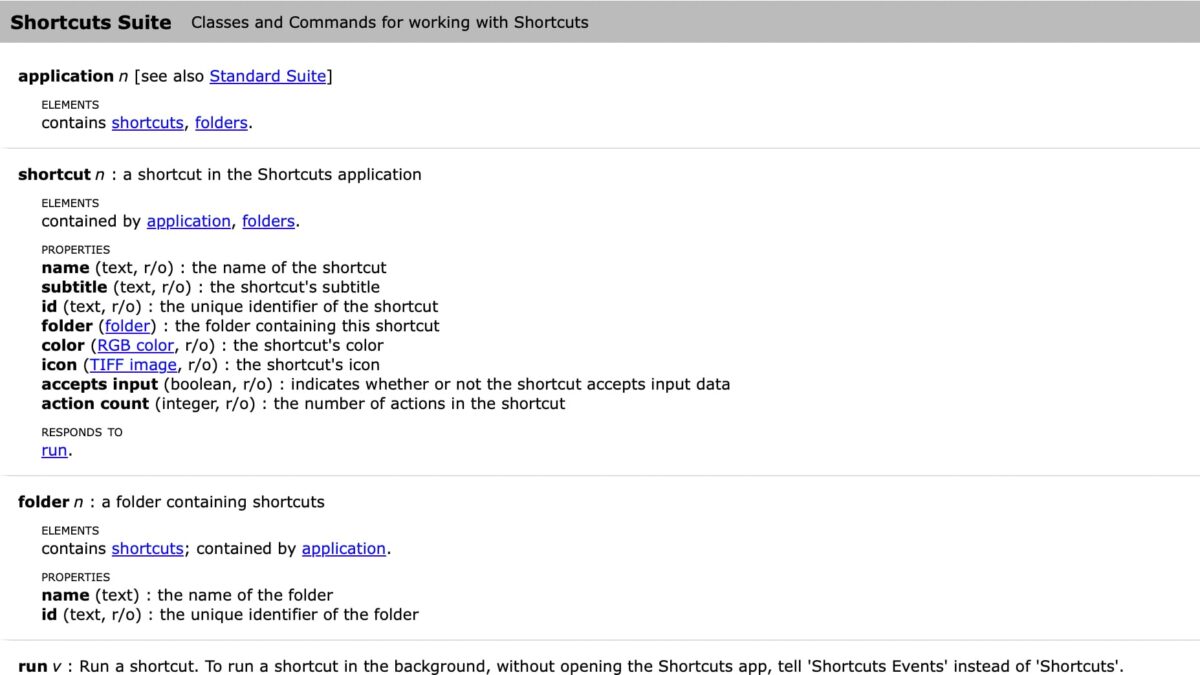
For reference, here’s what is documented in the command set:
Shortcuts Suite
Classes and Commands for working with Shortcuts
application n [see also Standard Suite]ELEMENTS
contains shortcuts, folders.
—-
shortcut n : a shortcut in the Shortcuts applicationELEMENTS
contained by application, folders.
PROPERTIESname (text, r/o) : the name of the shortcut
subtitle (text, r/o) : the shortcut’s subtitle
id (text, r/o) : the unique identifier of the shortcut
folder (folder) : the folder containing this shortcut
color (RGB color, r/o) : the shortcut’s color
icon (TIFF image, r/o) : the shortcut’s icon
accepts input (boolean, r/o) : indicates whether or not the shortcut accepts input data
action count (integer, r/o) : the number of actions in the shortcut
RESPONDS TOrun.
—-
folder n : a folder containing shortcuts
ELEMENTS
contains shortcuts; contained by application.
PROPERTIES
name (text) : the name of the folder
id (text, r/o) : the unique identifier of the folder
—-
run v : Run a shortcut. To run a shortcut in the background, without opening the Shortcuts app, tell ‘Shortcuts Events’ instead of ‘Shortcuts’.
run shortcut : the shortcut to run
[with input any] : the input to provide to the shortcut
→ any : the result of the shortcut
—-
To keep this post as reference material, I’ll share methods for utilizing these AppleScript commands here on my blog using my AppleScript tag.
To learn more about scripting, check out Apple’s documentation for Navigating a Script Dictionary – that’s part of the now-archived Mac Automation Scripting Guide which provides more insight into how Script Editor and AppleScript can be used across macOS.
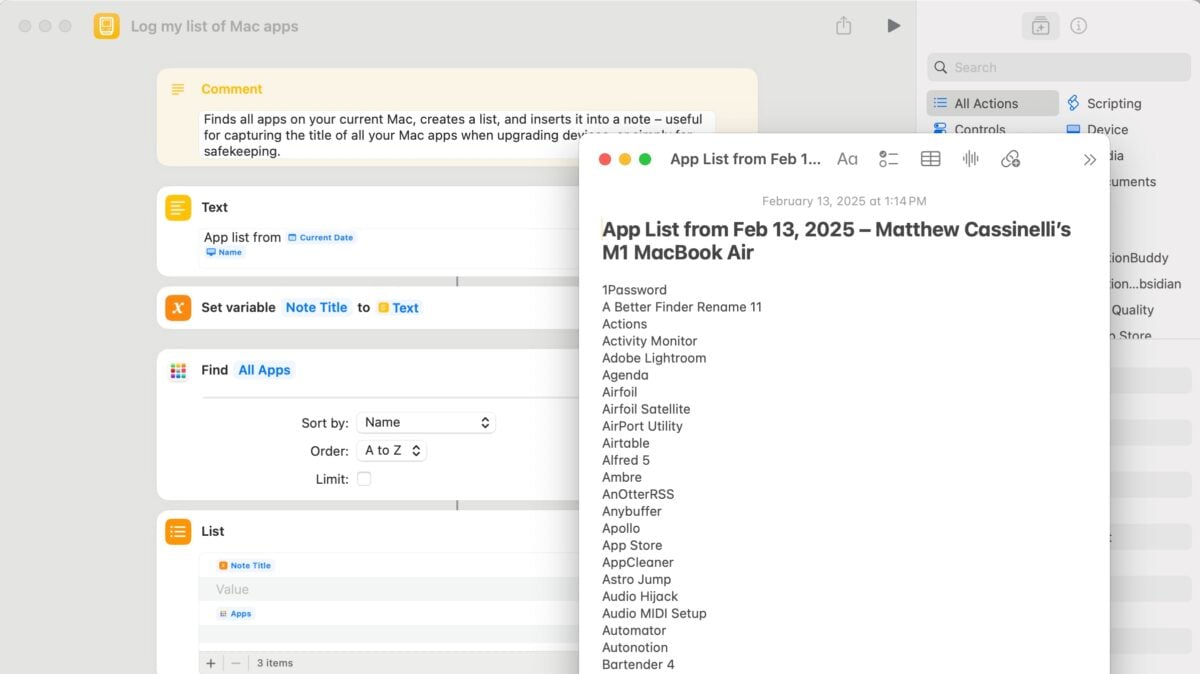
Setting up a new Mac can be a pain. Apple offers Migration Assistant, but I often find myself setting up a new device from scratch as a way to ensure nothing I might’ve messed up while playing around with automation tools on the old system comes over to the new one. That means taking note of all my tweaks, all my third-party Settings Panes, and, most importantly, all of my apps – something I’ve done manually before, but have now automated.
Back in iOS 16, Apple added an action to Shortcuts for Mac to Find Apps, which I first saw belonging alongside actions like Find Windows, Move Window, and Resize Window as a way to retrieve the available applications, choose one, and change their position. However, I recently realized Find Apps can simply be used to copy a list of all your Mac apps and store it for safekeeping – which I’ve built a shortcut for called “Log my list of Mac apps.”
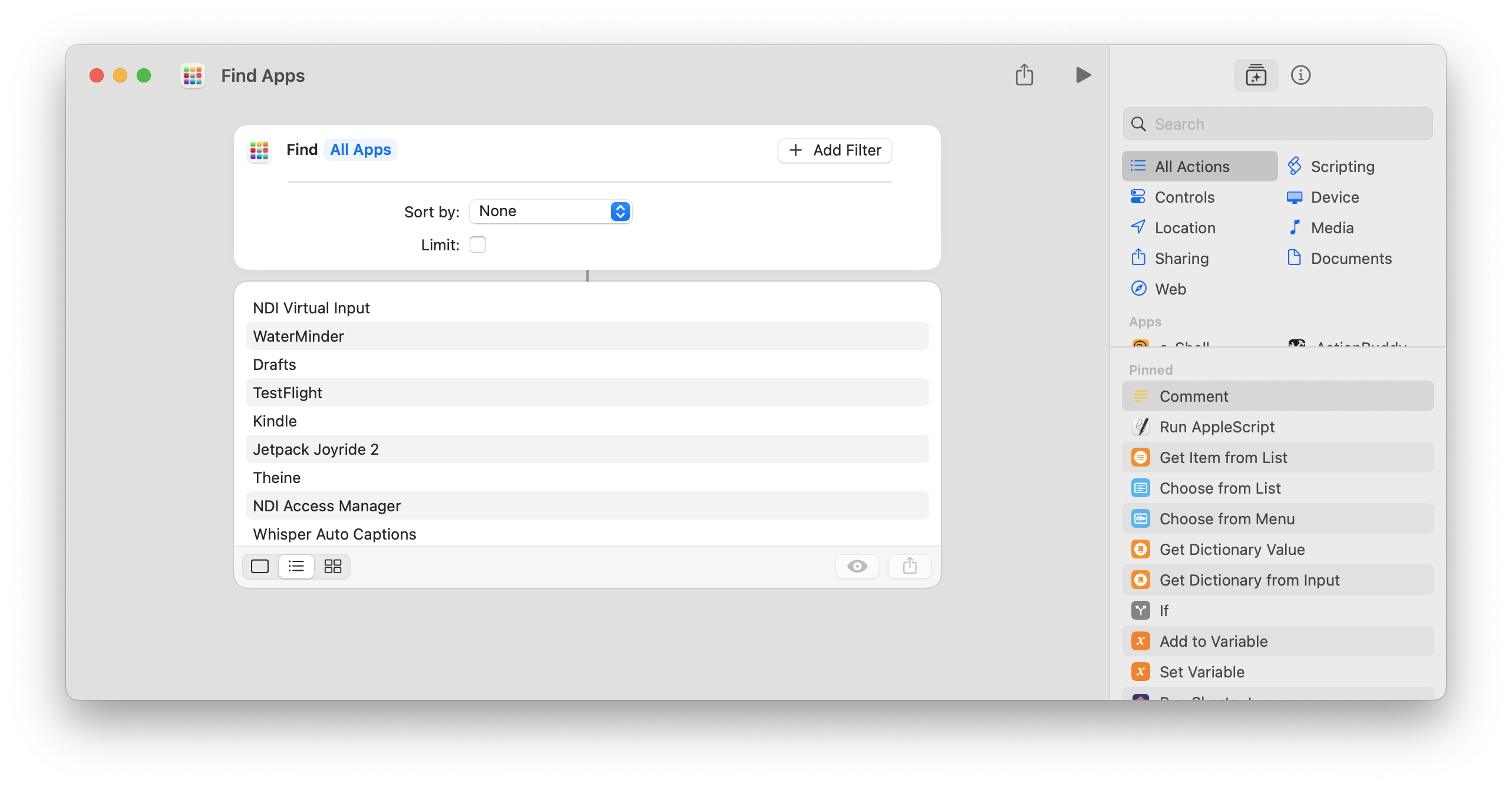
When run standalone, Find Apps gets all the apps from your applications folders – both your universal Applications folder, plus your individual user folder (this is important if you use Add to Dock with any websites). This list is unsorted by default, but by adding Sort By > Name and Order > A to Z, you can retrieve all your applications in alphabetical order.
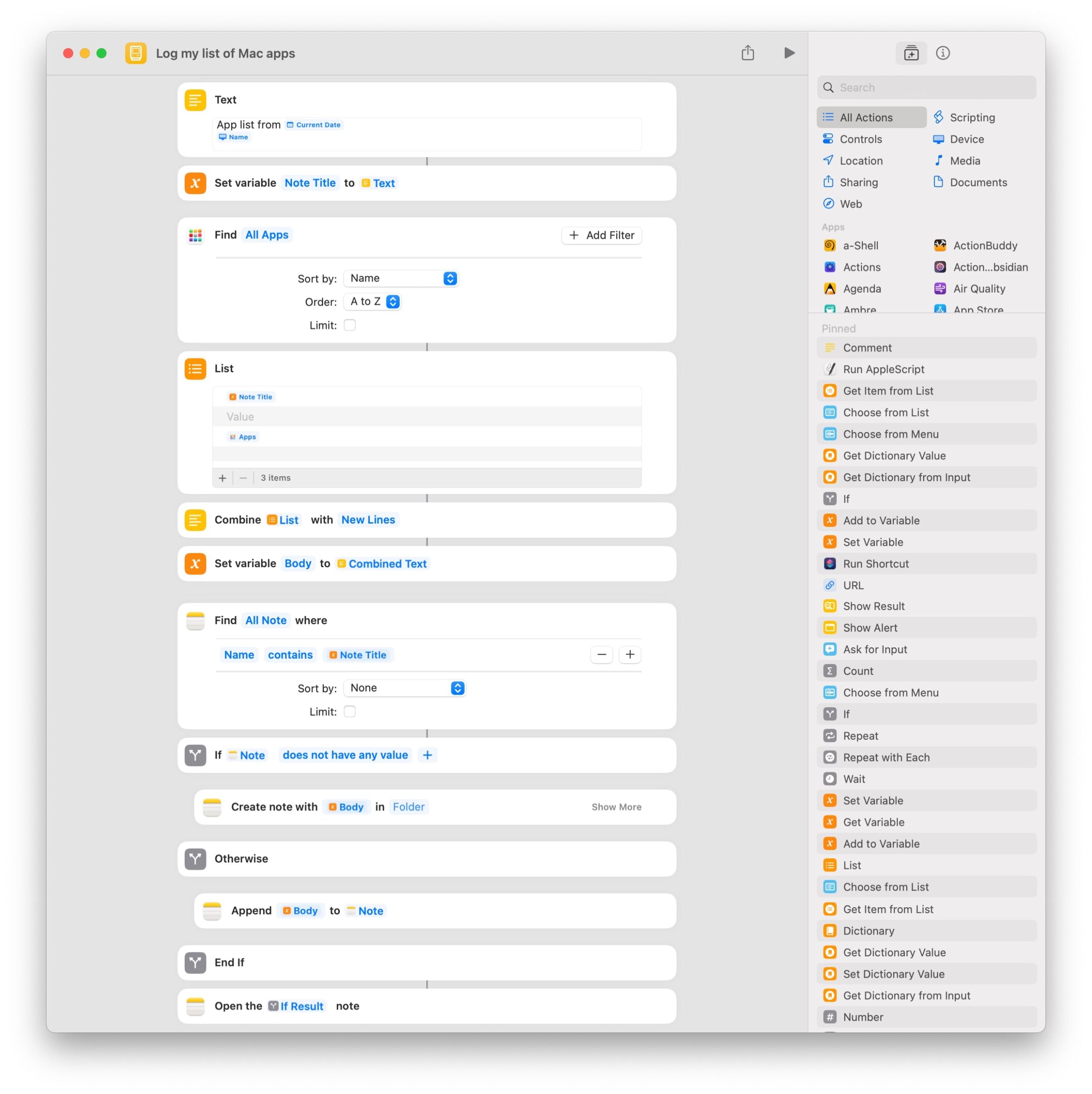
From there, I designed a shortcut to combine the list by new lines, create a note titled with today’s date and the device name, and add the list to the body of the note. It also includes logic to check for an existing note (if you’re running it on multiple Macs), as well as utilizes the List action to add an empty line between the title and body of the note – my aesthetic preference.
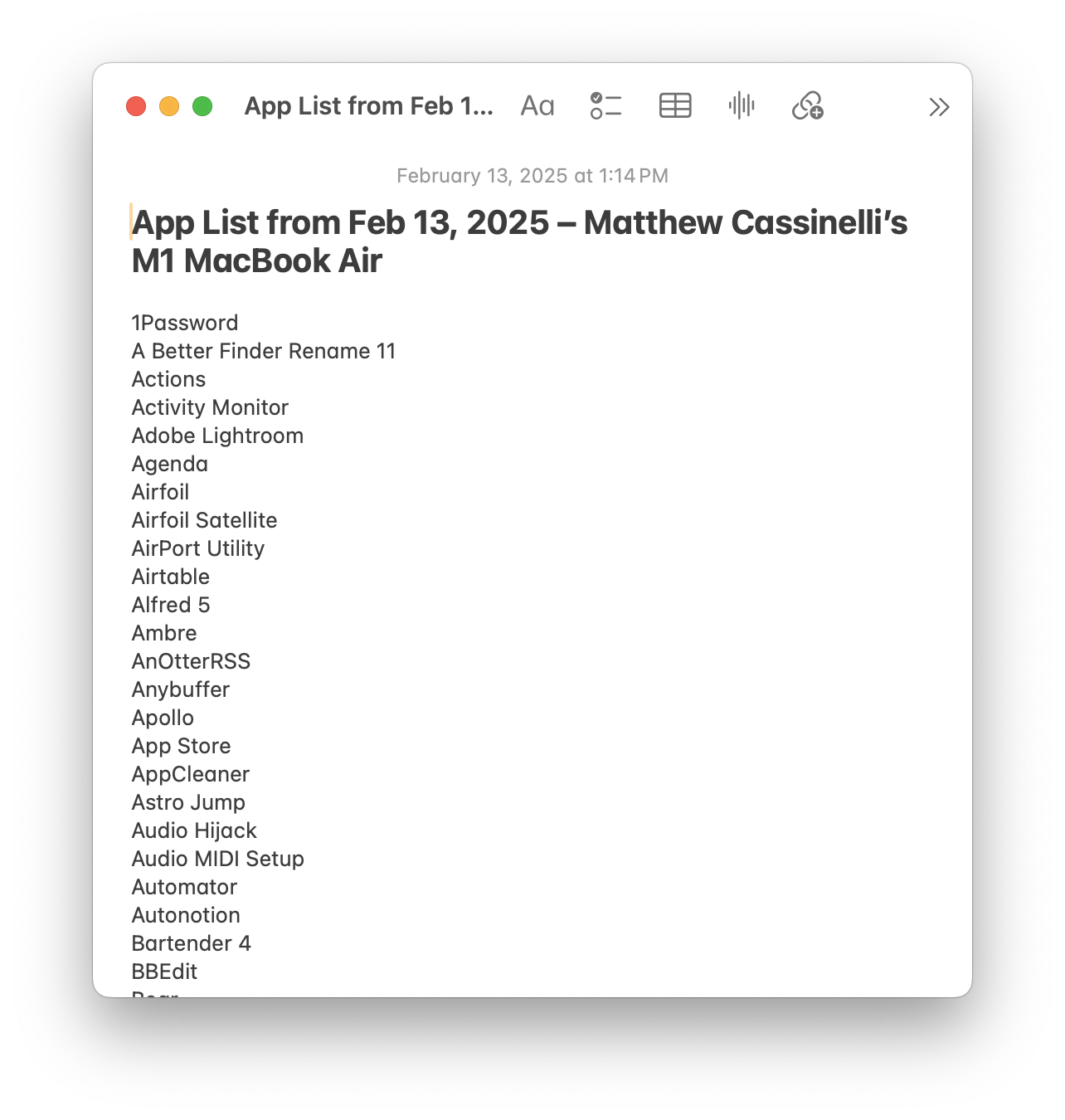
Finally, the note opens to your full list of Mac apps – stored in Notes for safekeeping and reference on your new device. Simple, but saves you the time of referencing your Applications folder over & over again when setting up a new device.
Get the shortcut Log my list of Mac apps in my Shortcuts Library.
Apropos of something admirable, I’ve just added a new folder to the Shortcuts Library — my set of MacStories shortcuts for interacting with MacStories.net, the premiere independent website for Apple news, app reviews, and Shortcuts coverage.
Use these shortcuts to access different parts of the site, find and listen to MacStories podcasts, show the website’s social media profiles, and dive into Club MacStories content.
MacStories is the website that introduced me to Shortcuts originally, and I learned so much from the Workflow tag back in the day – check it out:
Check out the folder of MacStories shortcuts on the Shortcuts Library.
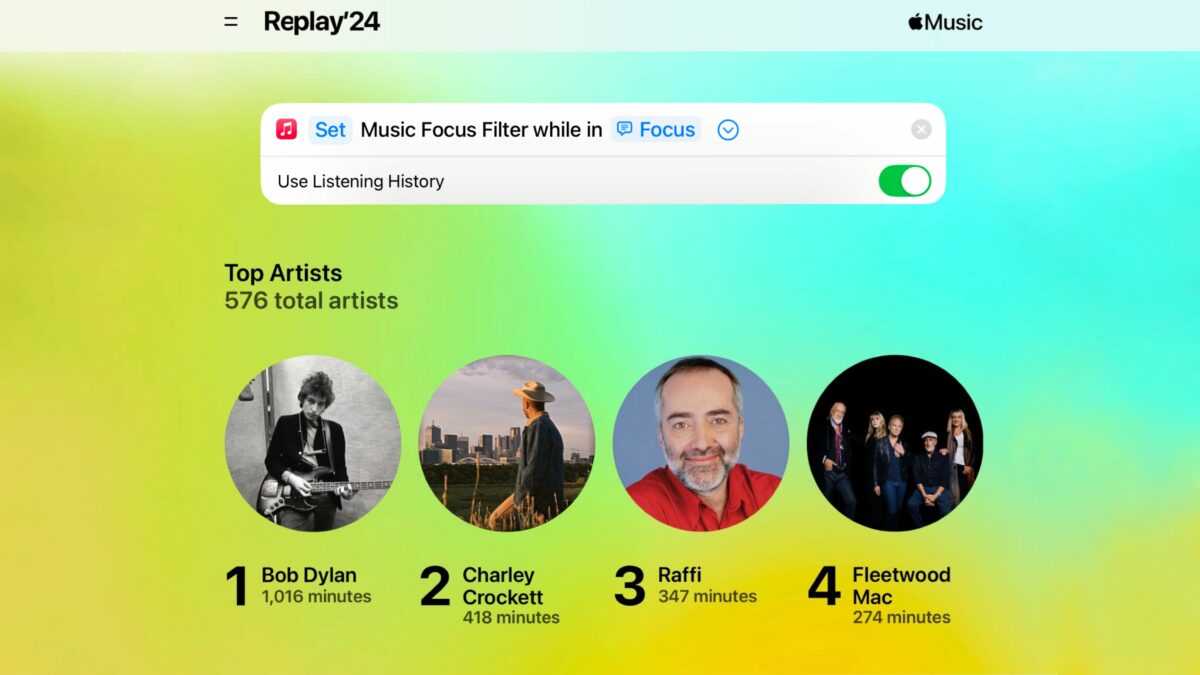
Apple has just released their Apple Music Replay feature for 2024, curating stats and visualizations around your listening habits from the last year on the web and in the app for the first time.
It’s always interesting to see your top tracks and artists, but some folks like Halide designer Sebastiaan de With have already run into a common problem – their children’s music is mixed in with their own:
The children’s music is gaining ground on my Apple Music replay. The burden of being a parent
— Sebastiaan de With (@sdw.bsky.social) December 3, 2024 at 10:00 AM
[image or embed]
Thankfully, Apple recently built a feature for the Music that lets you choose whether to Use Listening History, available in the form of a Focus Filter applied to a specific Focus mode.
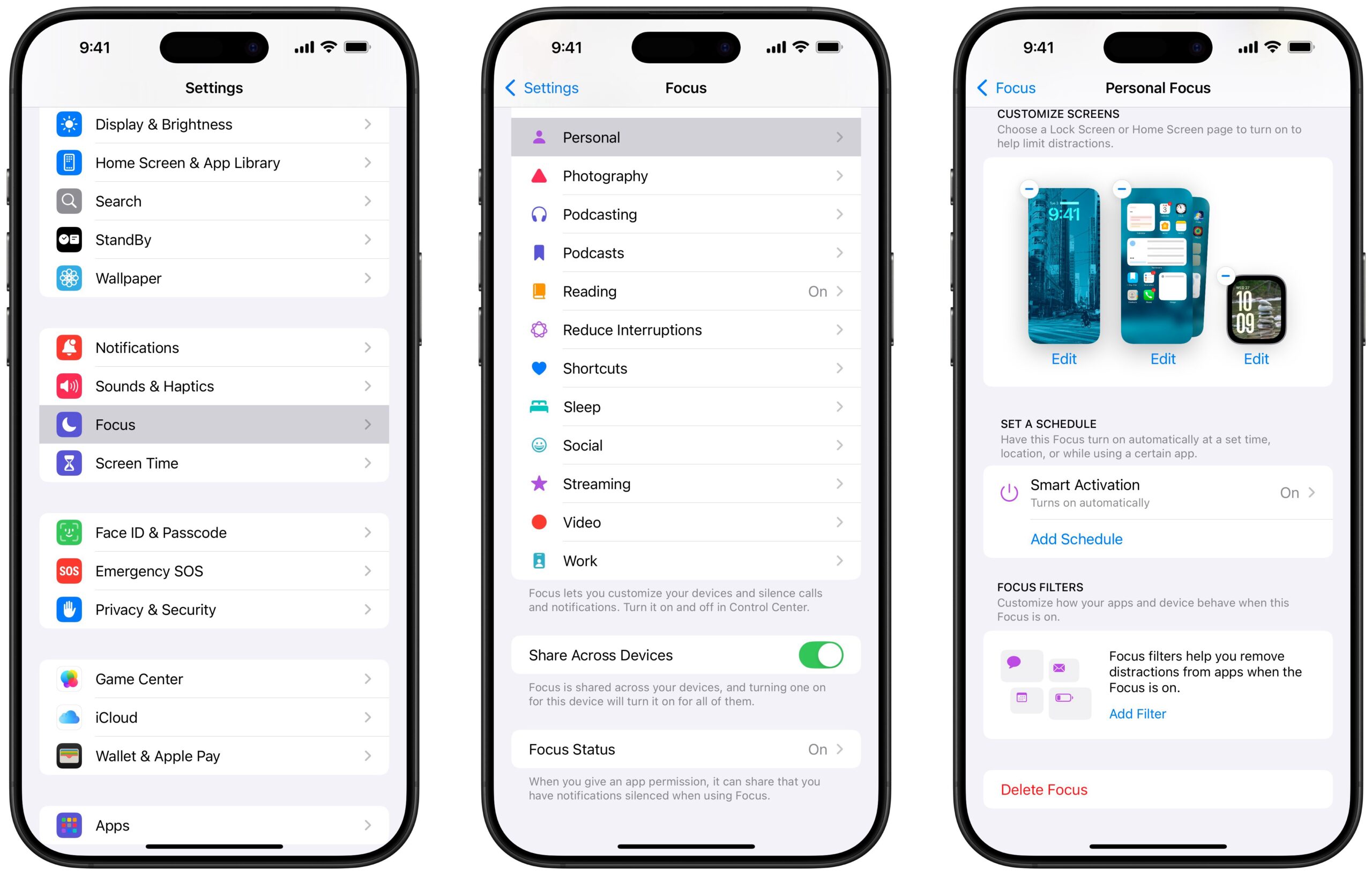
In Settings, in the Focus section, you can apply a Focus Filter to a specific Focus by choosing which mode from the list and scrolling down to Focus Filters, which Apple says lets you “Customize how your apps and device behave when this Focus is on.”
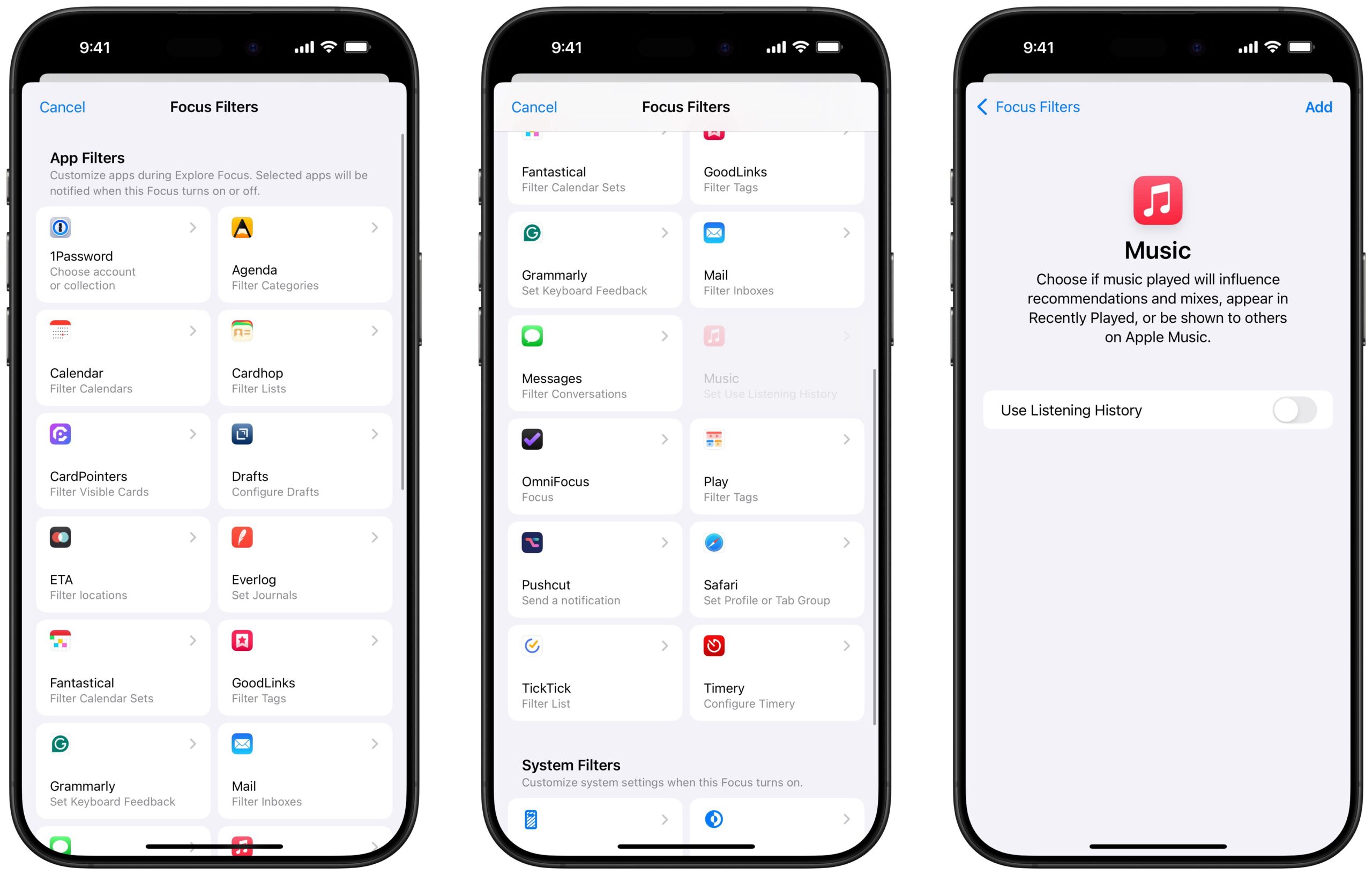
When you select “Add Filter,” you’ll see a popover of App Filters and System Filters that let you pick which filters to use to customize during this Focus. Apple’s description explains “Selected apps will be notified when this Focus turns on or off,” immediately activating the filter outside the app and updating things like the widget experience or background tasks.
For the Music app, there’s a Focus Filter for “Use Listening History” where you can “Choose if music played will influence recommendations and mixes, appear in Recently Played, or be shown to others on Apple Music.”
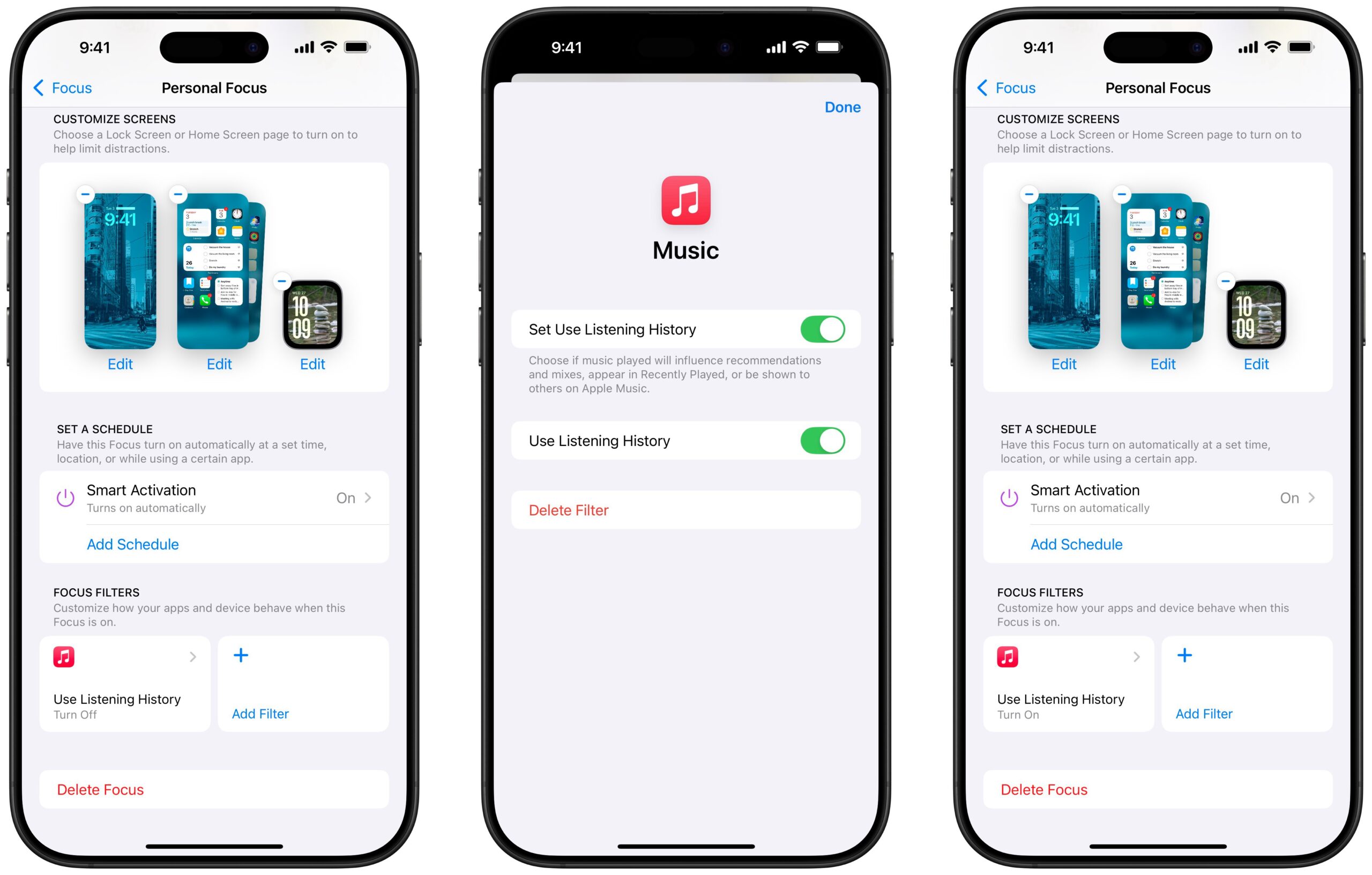
Adding the Focus Filter will apply it to the current Focus, whether it’s set off to ignore your habits or enabled to track your listening history whenever the Focus is enabled. For someone like a parent, they could create a “Home” mode separate from their own “Personal” mode and disable listening history while at home but enable it while listening on their own.
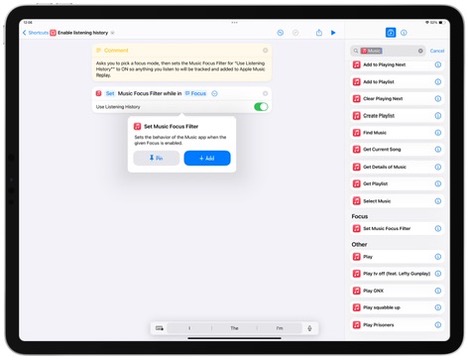
In iOS 18, Apple also added a Set Music Focus Filter action to the Shortcuts app that enables automated control over one’s listening history. With a Shortcuts action, users can add or clear the Focus Filter from any focus mode as needed, plus enable it or disable it on the fly without fully designating a Focus mode just for this feature.
In my set of Apple Music Replay shortcuts, I built two shortcuts that take advantage of it: Enable Listening History and Disable Listening History, which you can run to pick a Focus mode and toggle the setting as needed.
Adding this functionality in Shortcuts essentially makes the “Use Listening History” feature available separately from a Focus Filter, letting you toggle it on for any period of time and turn it off manually again when you’re done.
Plus, if you want to go even further, Automations in Shortcuts can give you control over whether to Use Listening History in almost any context, from triggers like location-based automations to whether you pressed the Action button while holding your iPhone horizontally while driving.
I also built shortcuts to Toggle Listening History for any Focus mode that works really well as a Control in Control Center, as well as a shortcut to Clear the Focus Filter from any Focus mode should you be done with the feature entirely.
Plus, since I enjoy listening to my Apple Music Replay playlists, I built a set of shortcuts for each year to shuffle the songs and let me quickly jump back into all my favorite songs ever since I first got an Apple Music subscription – as well as a new shortcut to show Apple Music Replay on the web.
Check out the folder of Apple Music Replay shortcuts in my Shortcuts Library and check out Sebastiaan’s post on Bluesky.
I’ve just added a new folder to the Shortcuts Library — my set of Apple Music Replay shortcuts for the Apple Music Replay experience, from accessing playlists to manage your listening history.
Use these shortcuts to add Music Focus Filters to control whether to Use Listening History, jump into the Replay experience on the web, or play from your past Apple Music Replay playlists:
Check out the folder of Apple Music Replay shortcuts on the Shortcuts Library.

I’ve just added a new folder to the Shortcuts Library — my set of Comixology shortcuts for reading comics using Comixology from Amazon and the Kindle website.
Use these to manage your library, find new comics to buy, and check out Comixology Unlimited:
Check out the folder of Comixology from Amazon shortcuts on the Shortcuts Library.

I’ve just added a new folder to the Shortcuts Library — my set of Bluesky shortcuts for accessing the different parts of the Bluesky social network.
Use these to switch to different tabs in the app or on the web, access your Lists, and open any profile:
Check out the folder of Bluesky shortcuts on the Shortcuts Library and follow me on Bluesky.

I’ve just added a new folder to the Shortcuts Library — my set of Amazon app shortcuts for launching into Amazon’s iOS and iPadOS apps using the native actions provided by Amazon.
These are automatically available as App Shortcuts if you have the Amazon app; I made these so standalone versions are available, and you can use these to add them to your Shortcuts widget:
Check out the folder of Amazon app shortcuts on the Shortcuts Library.
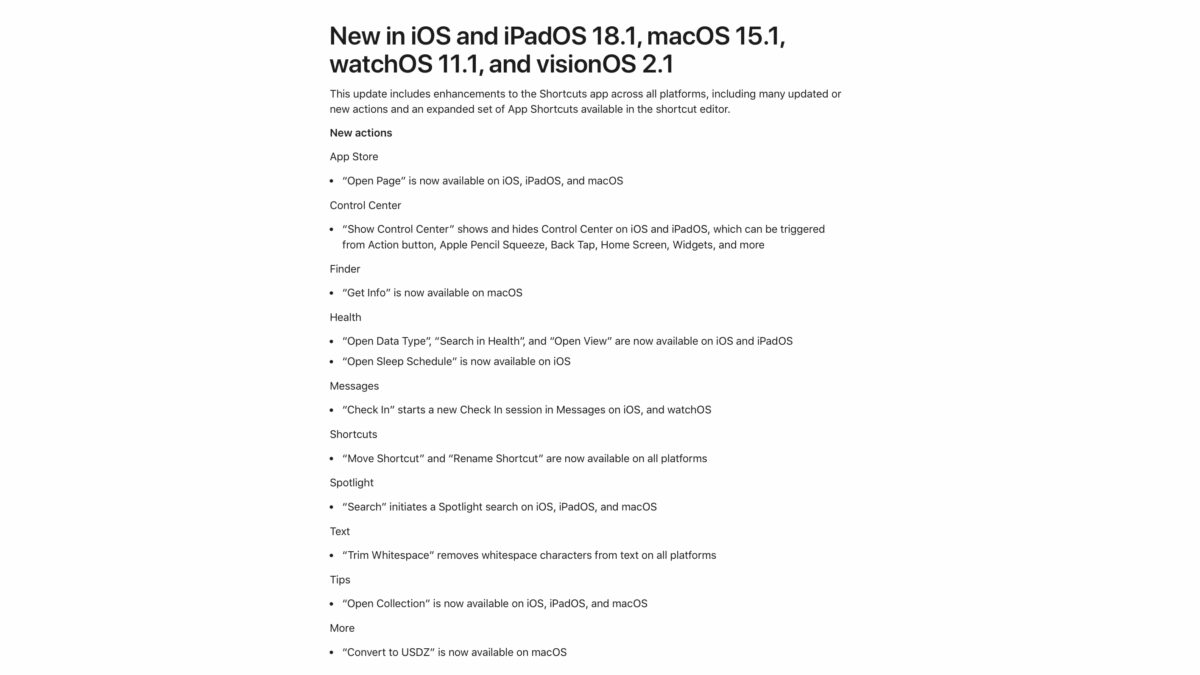
From Apple Support:
This update includes enhancements to the Shortcuts app across all platforms, including many updated or new actions and an expanded set of App Shortcuts available in the shortcut editor.
New actions
App Store
- “Open Page” is now available on iOS, iPadOS, and macOS
Control Center
- “Show Control Center” shows and hides Control Center on iOS and iPadOS, which can be triggered from Action button, Apple Pencil Squeeze, Back Tap, Home Screen, Widgets, and more
Finder
- “Get Info” is now available on macOS
Health
- “Open Data Type”, “Search in Health”, and “Open View” are now available on iOS and iPadOS
- “Open Sleep Schedule” is now available on iOS
Messages
- “Check In” starts a new Check In session in Messages on iOS, and watchOS
Shortcuts
- “Move Shortcut” and “Rename Shortcut” are now available on all platforms
Spotlight
- “Search” initiates a Spotlight search on iOS, iPadOS, and macOS
Text
- “Trim Whitespace” removes whitespace characters from text on all platforms
Tips
- “Open Collection” is now available on iOS, iPadOS, and macOS
More
- “Convert to USDZ” is now available on macOS
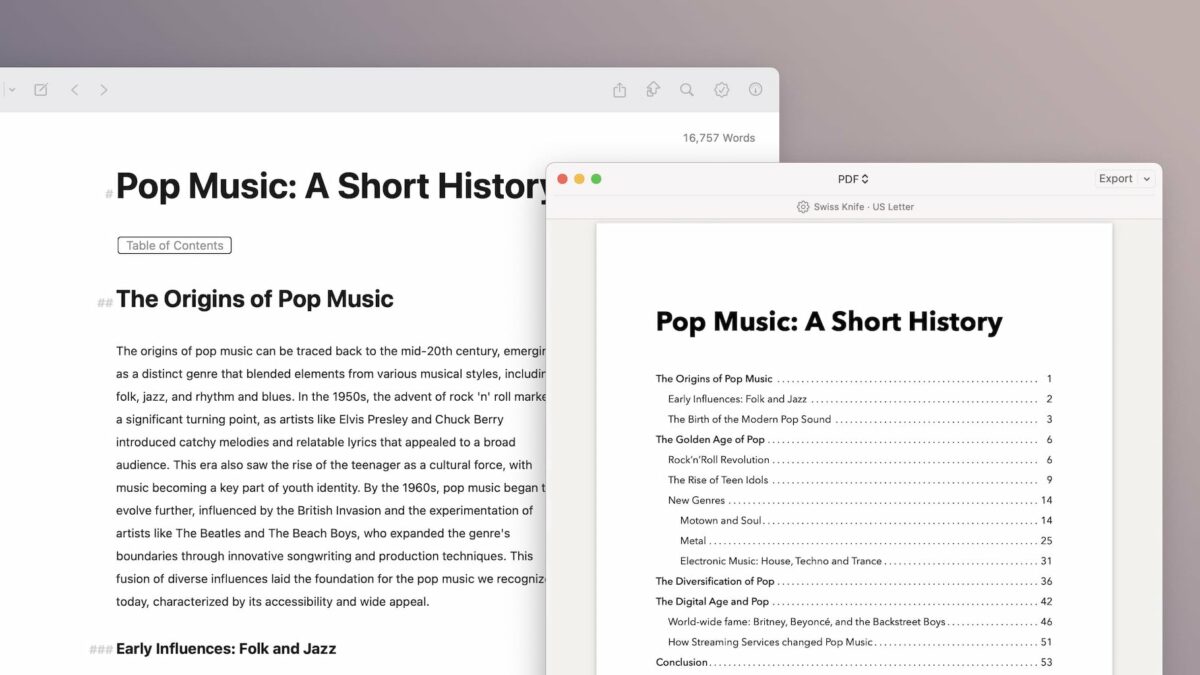
From Ulysses’ v36 release notes:
- You can now launch Ulysses from the Action button found on the latest iPhone models.
- “New Sheet” will launch Ulysses into a new, empty sheet in your Inbox.
- “Last sheet” will open the last edited sheet.
- “Search” will launch Ulysses directly into Quick Open.
- These actions are also available via Control Center on iOS 18.1.
Very excited to see these new actions – I got a chance to talk with the Ulysses team at NSSpain and have been eagerly anticipating these.
These actions join the new Table of Contents feature and updates to support Apple Intelligence Writing Tools.

On Sunday, September 8, on the Mac Power Users podcast, I had the pleasure of joining hosts David Sparks and Stephen Hackett – here’s the show notes:
Matt Cassinelli joins the show to discuss his background with Workflow and Apple and how it led to him becoming the “Shortcuts Guy.” The group then discusses Apple’s automation tools across its platforms, and how those tools have extended to the web.
Check out the Mac Power Users in Apple Podcasts or listen to the episode below: